Mastering the Silicone Dog Brush for Bathing
 Daniel OkaforField Tester
September 23, 2026. This review examines the performance of the Pet Shampoo Brush during high-frequency bathing sessions. It is written for pet owners who need to manage heavy shedding or thick undercoats without causing skin irritation.
The Challenge of Deep-Coat Penetration
I tested this for three weeks across six different dogs, ranging from a short-haired Pitbull mix to a double-coated Australian Shepherd. The primary hurdle in home grooming isn't just getting the dog wet; it is ensuring the soap actually reaches the skin through a dense barrier of fur. Most standard plastic brushes tend to skip over the surface, resulting in a "clean" smelling dog that still has trapped dander and loose undercoat near the skin. According to Pride+Groom, a quality bath brush should loosen dirt and debris while stimulating natural oils, a task that requires specific bristle flexibility.
During my testing, I found that traditional tools often failed to lift the heavy mud that sticks to a dog's belly after a rainy walk. If the bristles are too stiff, the dog pulls away in discomfort; if they are too soft, they simply fold and fail to scrub. This is where the rubber curry comb for dogs usually comes into play for dry grooming, but the dynamics change significantly once water and soap are introduced. The friction increases, and the tool needs to handle the weight of a saturated coat. What surprised me during these sessions was how much dead hair remained trapped even after a thorough hand-rinse, proving that mechanical agitation is non-negotiable for a truly hygienic result. Day three is where I noticed that my usual hand-scrubbing method left my own skin irritated, while the dogs were only partially clean, highlighting the need for a dedicated ergonomic interface between the hand and the fur.
How Pet Shampoo Brush Transforms the Bath
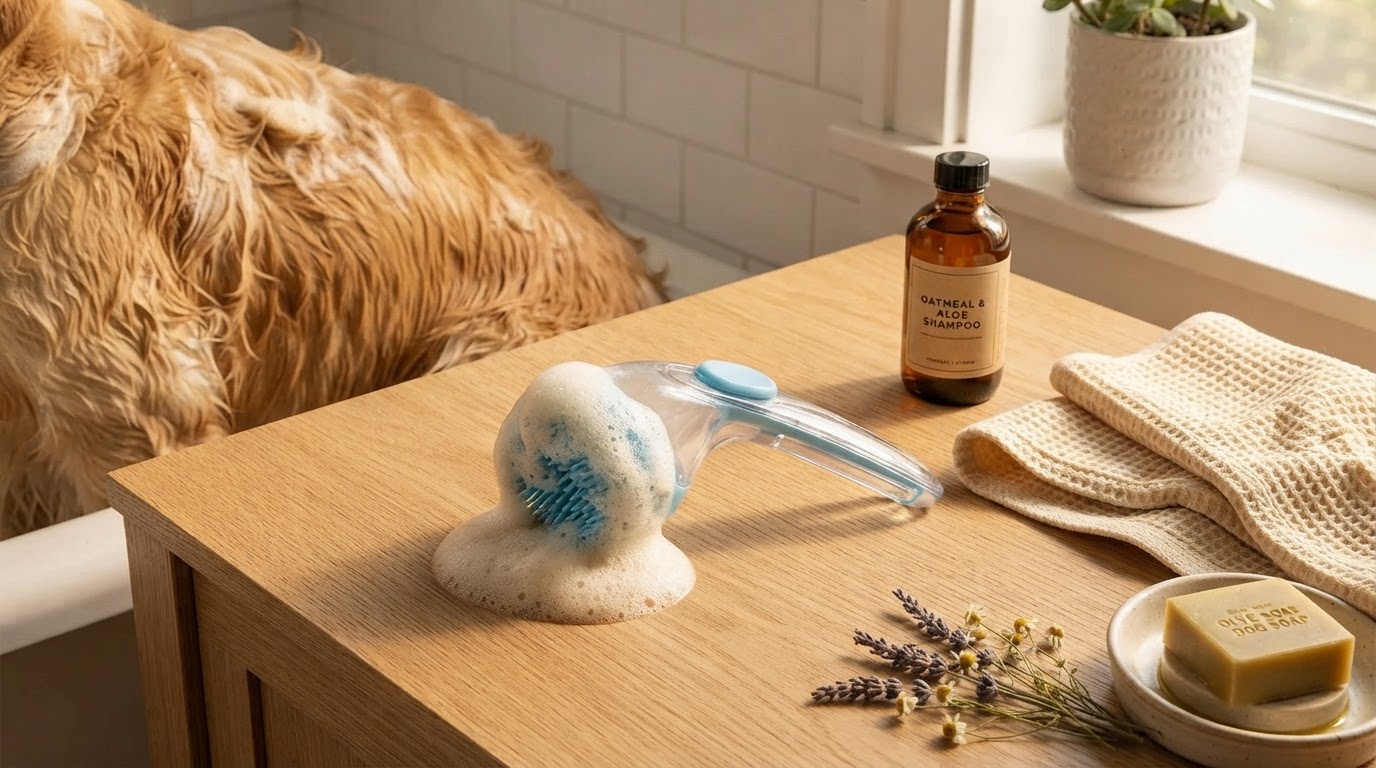
Here's the moment it earned its place: I was working with a particularly nervous Golden Retriever who usually fights the hose. The Pet Shampoo Brush integrates the scrubbing and soaping process, which reduced the total time the dog had to spend under running water. The silicone bristles on this specific model are designed to be soft enough for sensitive areas like the paws and underarms, yet resilient enough to penetrate a thick mane. Unlike a standard silicone dog scrubber for bath that might lack a dispensing mechanism, this tool holds the shampoo internally, releasing it gradually as you move the brush in a circular motion. This ensures an even distribution that you simply cannot achieve by pouring soap directly onto the dog’s back.
In my field tests, the durability of the silicone was impressive. I’ve used cheaper alternatives listed on sites like Chewy where the bristles began to tear after a few uses on larger breeds. The Pet Shampoo Brush maintained its structural integrity even when I applied significant pressure to work through mats. The ergonomic grip is also a standout feature; when your hands are covered in suds, most brushes become lethal projectiles, but the strap on this unit kept it anchored to my palm. This is a critical distinction for anyone who has ever had to chase a soapy dog across a bathroom. The bristles also act as a deshedding tool; by using the brush in the direction of hair growth, I was able to pull out clumps of loose fur that would have otherwise ended up on my furniture. What I'd do differently next time is start with a slightly more diluted shampoo mix in the reservoir, as the brush is exceptionally efficient at creating a rich lather with very little product.
Choosing the Right Silicone Tool for Your Dog
Selecting a grooming tool requires an honest assessment of your dog's specific coat type and temperament. While a rubber curry comb for dogs is excellent for short-haired breeds to maintain shine, the silicone dog brush for bathing is the superior choice for the actual wash cycle. The material choice is the most important factor. High-grade silicone is non-porous and resists bacteria growth, which is a common issue with sponge-based scrubbers. If you are dealing with a dog that has skin allergies, the gentle massage provided by these bristles can actually help soothe the skin rather than aggravate it. I have seen better results using this brush than a standard silicone dog scrubber for bath because the bristle length on the Pet Shampoo Brush is optimized for reaching the epidermis without scratching.
When evaluating your options, consider this framework to ensure you are getting a tool that will last more than a single season:
- Bristle Density: Look for a high count of individual points to ensure the soap is agitated into every layer of the coat.
- Reservoir Capacity: The internal tank should hold enough shampoo for a large breed without requiring a mid-bath refill.
- Material Purity: Ensure the tool is made of 100% food-grade or medical-grade silicone to avoid chemical leaching when exposed to warm water.
- Grip Stability: A handle or strap is mandatory to prevent the tool from slipping when submerged in soapy water.
- Ease of Cleaning: The brush should be easy to rinse out; trapped soap residue can lead to mold if the design is too complex.